


The Ultimate QuantumBlooms Ranunculus Care Guide
- rizpotarn
- 5 days ago
- 3 min read
The Ultimate QuantumBlooms Ranunculus Care Guide: From Crispy Failures to Glorious, Ruffled Glory (Because These Divas Deserve Their Own Manual After My Epic Battles)

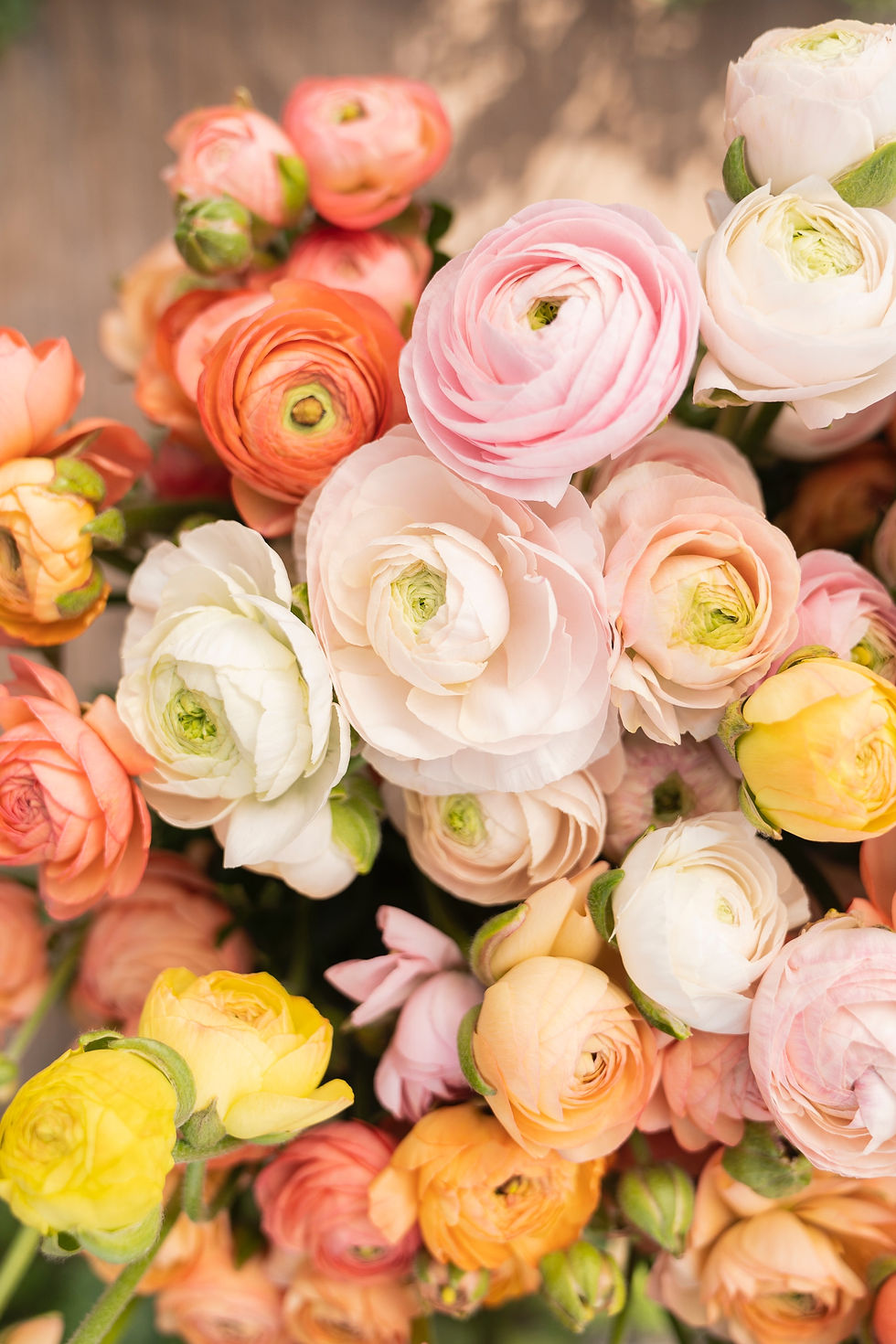
Hey fellow bloomers, it's QuantumBlooms here—fresh off my sixth-year redemption arc where I finally stopped treating ranunculus like low-maintenance succulents and started treating them like the petal-packed prima donnas they truly are. If you've read my chronicles, you know: Year 1 was a drought disaster (forgot to water—oops), Year 2 was a frozen fiasco in the caterpillar tunnel (thanks, rogue cold snaps), and Year 3? Pure magic after obsessing over every grow guide like it was a treasure map.This detailed guide compiles the best practices (so you can skip straight to success without the comedy-of-errors reruns). Ranunculus (aka Persian buttercups) are tender perennials grown as annuals in most zones, famous for their tissue-paper layers in jewel tones. They bloom in early spring, love cool weather, and hate extremes. Let's break it down step by step—no fluff, just facts with a side of humor.
1. Choosing & Storing Corms (The Dry Little Octopuses)
Buy firm, plump corms (they look like tiny dried-up octopus legs). Store in a cool (50-60°F), dry, dark place in their original packaging until ready—think fridge drawer vibes, but not actually in the fridge unless specified.
Pro tip: Don't let them freeze or get soggy. They're dormant drama queens.
2. When to Start (Timing Is Everything—Ask My Frozen Year 2)
Zones 7-10: Plant in fall for overwintering (mild winters only) or late winter/early spring.
Zones 4-6: Late winter/early spring indoors or in a hoop house.
Zones 1-3: Mid-late March.
Goal: Soil temp around 50°F for planting out. Plant 4-6 weeks before last frost if direct-sowing, or earlier if pre-sprouting for blooms a few weeks sooner.
In hot climates? Provide afternoon shade once temps climb above 70°F—blooms fizzle fast in heat.
3. Soaking the Corms (Wake-Up Call—Don't Skip!)
Soak in room-temperature water for 3-4 hours (max 6-12 if stubborn). They'll double in size and sprout those cute "tentacles" (roots facing down).
Don't oversoak—they rot like forgotten leftovers. Change water if it gets funky.
Optional but recommended: Add a splash of organic liquid fertilizer for a boost.
4. Pre-Sprouting (The Head-Start Hack I Wish I'd Used Sooner)
After soaking, place in a shallow tray with moist (not wet!) potting soil, tentacles down, fuzzy top up.
Cover lightly (1/2 inch soil), keep in a cool spot (45-60°F) under grow lights or bright indirect light.
Check every 3-4 days—keep soil lightly moist, remove any moldy ones immediately.
Wait 10-14 days until small roots and 1-2 inch leaves appear. This jumps your bloom timeline and reduces rot risk.
5. Planting (Right-Side Up or Bust!)
Location: Full sun (6-8+ hours), well-draining soil (amend with 2-3 inches compost + balanced organic fertilizer like 7-2-4). Raised beds or hoop houses rule for control.
Spacing: 4-9 inches apart (tighter for cut flowers, wider for airflow).
Depth: 1-2 inches deep (twice the corm height), "octopus legs" down, fuzzy side up.
Plant in rows (4 per bed common) after last frost risk or in protected spots.
Water well after planting—consistent moisture is key (but no swamp).
6. Ongoing Care (The Daily Drama Prevention)
Watering: Keep soil evenly moist but never soggy—top inch dry? Water. Overwatering = root rot city. Underwatering = crispy leaves (hello, Year 1 flashbacks). Mulch to retain moisture and cool roots.
Fertilizing: Bi-weekly with balanced water-soluble or liquid organic (fish emulsion, etc.) once leaves emerge. Foliar sprays weekly? Extra pampering for bigger blooms.
Support: Tall stems may need netting or stakes in wind.
Deadheading: Snip spent blooms to encourage more—cut-flower style, harvest when buds show color.
Temperature: Protect from hard freezes (hoop house, row cover, or bring pots in). They tolerate light frost but hate prolonged cold or heat over 75°F.
Airflow: Good circulation prevents fungal drama—space properly, avoid overcrowding.
7. Common Problems & Fixes (Troubleshooting for Future-Proofing)
Root Rot / Pythium / Botrytis: Too wet, poor drainage. Fix: Improve drainage, water at soil level, use preventative fungicide during soak if prone. Err dry over soggy.
Wilting / Crispy Leaves: Underwatering or heat stress. Water consistently; shade in hot afternoons.
Yellowing / Collapse: Overwatering, salt buildup, calcium deficiency. Flush soil, fertilize balanced.
Pests (Aphids, etc.): Rare but blast with water or neem. Deer/rabbits may nibble—fence if needed.
No Blooms: Too hot too soon, poor light, skipped fertilizer. Cool temps + sun = success.
8. After Bloom / Storage (End-of-Season Send-Off)
Let foliage yellow and die back naturally.
In cold zones: Dig corms, dry thoroughly, store cool/dry for next year (or treat as annuals).
In mild zones: Mulch heavily for overwintering.
Bottom line from your battle-scarred grower: Ranunculus reward obsession. Water like it's your job, protect from extremes, and read that guide until it whispers sweet nothings. Nail the basics, and you'll get armloads of those ruffled masterpieces that make every vase look Instagram-ready.You've got this—third time's the charm, or fourth if you're as stubborn as me. Happy (and finally victorious) growing,



Comments